Why Global NCAP Safety Ratings Matter More Than Ever
In today’s Indian car market, fuel efficiency and features are no longer enough. With road accidents claiming over 1.5 lakh lives annually in India, safety ratings from Global NCAP have become a critical decision-making factor. These crash tests reveal how a car performs in frontal and side impacts at 64 km/h, offering a realistic picture of occupant protection something brochure specs cannot show.
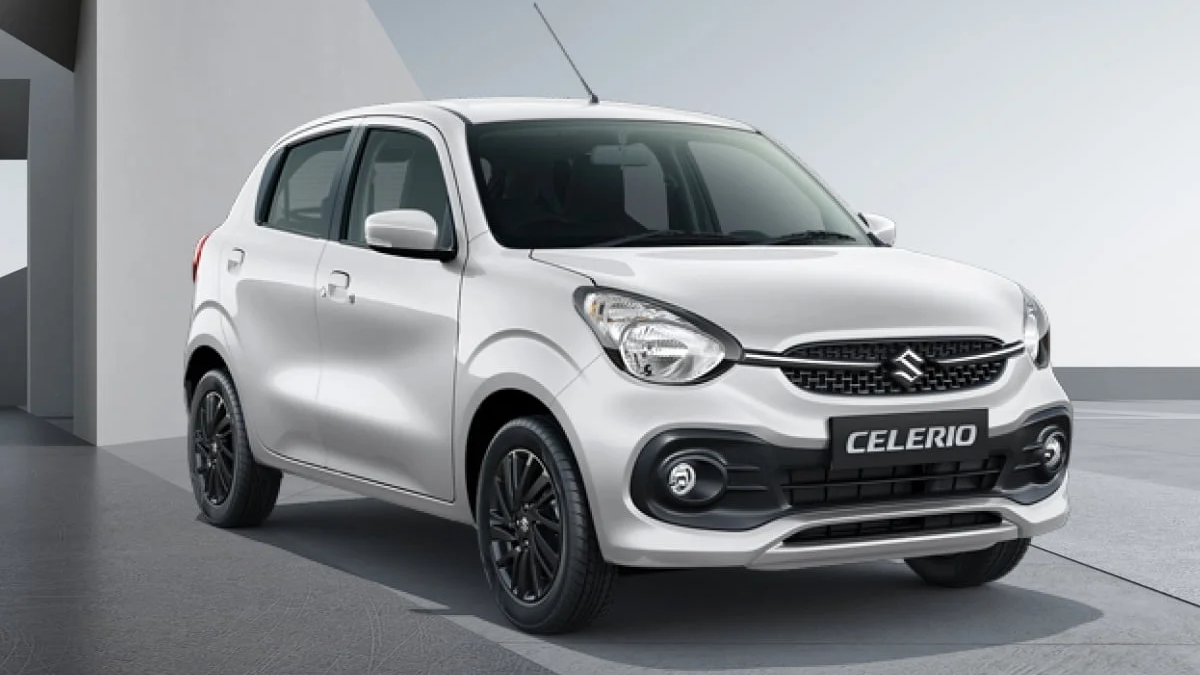
Maruti Celerio Global NCAP Score: Average Safety, Despite 6 Airbags
The Maruti Celerio, tested in a fully loaded configuration with six airbags, ESC, ISOFIX mounts and three-point seatbelts for all occupants, managed to score 3 stars for adult occupant protection and 2 stars for child occupant protection.
On paper, this sounds respectable for an entry-level hatchback. However, a deeper look at the figures paints a more cautious picture. The Celerio scored 24.43 points out of 34 for adult protection, with Global NCAP noting that the bodyshell and footwell area were unstable. While head protection for front occupants was rated adequate to good, chest and lower leg protection remained marginal in frontal crashes.
Celerio Child Safety: Acceptable, But Not Reassuring
For child occupants, the Celerio scored 38.81 points out of 49, translating to a 3-star rating. Side impact protection was rated good, but frontal crash tests revealed weak protection for the head and chest of both 18-month-old and 3-year-old child dummies. This indicates that while the car meets minimum safety expectations, it falls short of offering strong reassurance to families with young children.
Maruti Ciaz Global NCAP Rating: A Bigger Car, A Bigger Disappointment
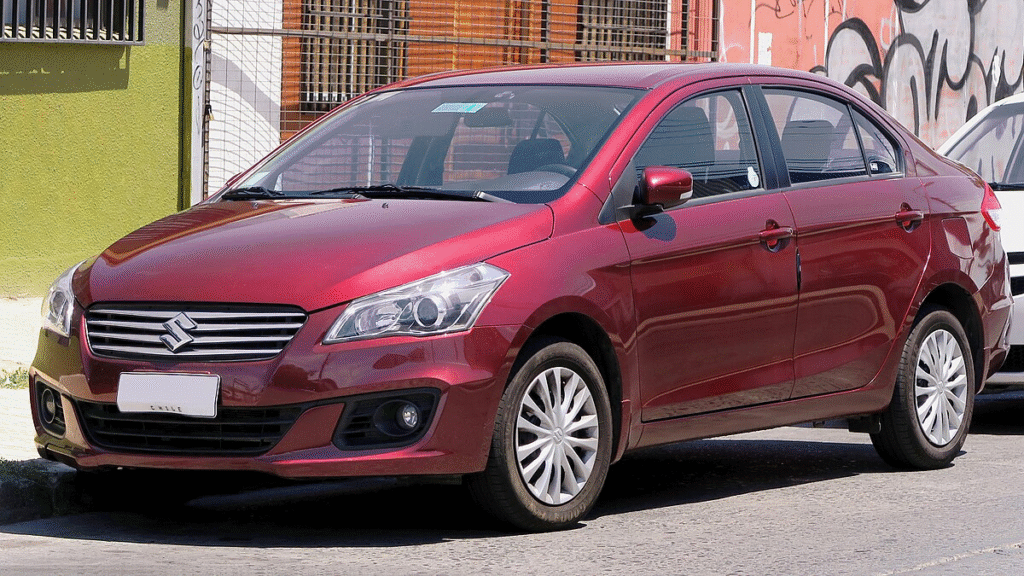
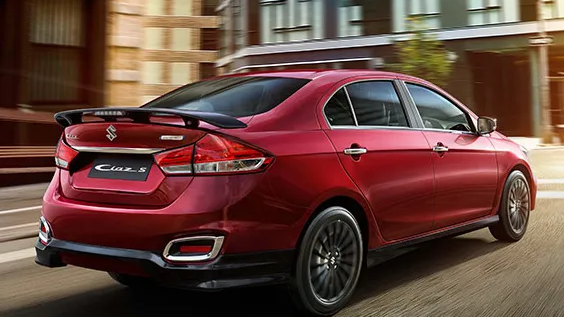
The most concerning result comes from the Maruti Ciaz. Despite being a midsize sedan positioned above the Celerio in price and size, the Ciaz managed just 1 star for adult occupant protection, scoring 20.82 points out of 34.
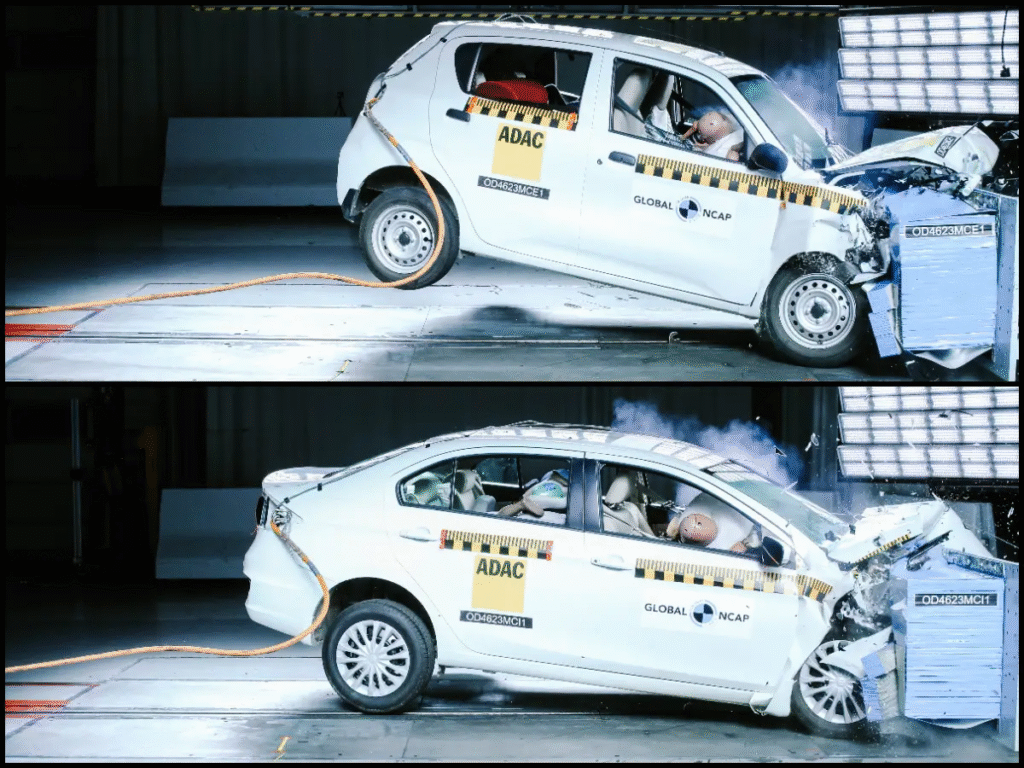
This low rating is a clear red flag. A major reason for the Ciaz’s 1-star rating was poor protection for the driver’s feet and excessive pedal displacement. Global NCAP explicitly stated that the bodyshell could not withstand further loadings, severely limiting the car’s crashworthiness.
Ciaz Child Occupant Protection: The Only Saving Grace
Ironically, the Ciaz performs better when it comes to child safety. It earned 3 stars for child occupant protection, scoring 28.57 points out of 49. ISOFIX-mounted child seats showed stable performance in both frontal and side impact tests. However, this does little to offset the concern that adult occupants remain poorly protected in serious collisions.
Airbags Are Not Enough: Structural Integrity Is the Real Issue
The contrasting results of the Celerio and Ciaz reinforce an uncomfortable truth: airbags alone do not guarantee safety. Structural strength, load paths and energy absorption play a decisive role in crash protection. A car with six airbags but an unstable bodyshell will still struggle to achieve high safety ratings a problem evident in both these Maruti models.
What These Crash Test Results Mean for Indian Car Buyers
For Indian buyers, especially families, these Global NCAP scores highlight the importance of looking beyond brand trust and mileage figures. While Maruti Suzuki deserves credit for standardising safety features like airbags and ESC, the lack of structural robustness in some models remains a concern.
In a market where rivals are now offering 4- and 5-star rated cars at similar price points, these results may push safety-conscious buyers to reconsider their options.
Final Verdict: Compliance Achieved, Confidence Still Missing
The Maruti Celerio delivers average safety suitable for urban commuting, but it does not set benchmarks. The Maruti Ciaz, despite its premium positioning, falls short of modern safety expectations. As Indian consumers become more informed, Global NCAP ratings like these will increasingly influence buying decisions and manufacturers will need to respond with stronger platforms, not just more airbags.